
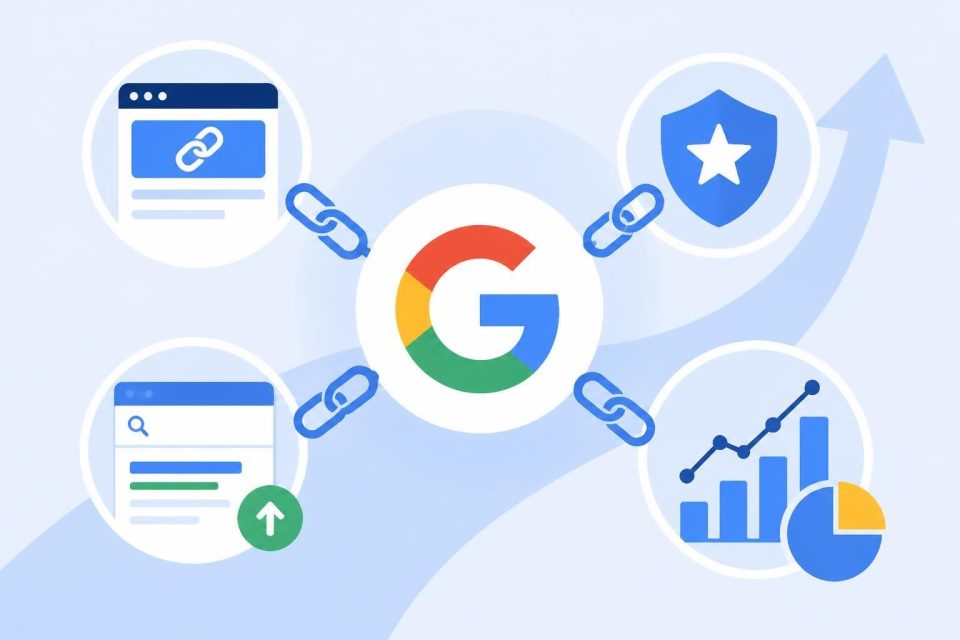
For businesses that rely on search traffic, Google updates can influence how easily customers find their websites. Changes to search systems may affect rankings, but the underlying challenge remains familiar: build a useful site and earn attention through credible, relevant signals. Link building can support that work when it reflects genuine editorial value. Shortcuts such as buying links to manipulate rankings can instead create risk.
That distinction matters to marketing teams, publishers and business owners alike. A link is not automatically beneficial simply because it points to your website. Its context, purpose and method of acquisition all matter. Understanding the principles behind Google’s link spam policy can help companies set better campaign standards and avoid strategies that may undermine long-term visibility.
What makes a link-building tactic risky?
Search engines use links as one signal for understanding how pages relate to one another and which sources may be useful. But links created primarily to pass ranking credit can distort those signals. Common examples include paying for followed links, exchanging links at scale, using private link networks, and placing automated links across unrelated websites.
Not every commercial relationship involving a link is inherently problematic. The key issue is whether the link is presented transparently and whether it is intended to manipulate search rankings. For instance, a paid placement should use an appropriate link attribute, such as “sponsored” or “nofollow,” rather than being presented as an independent editorial recommendation. Marketers can review Google’s link spam policy to understand how paid links, link networks and automated placements are treated.
Rules are only part of the picture. A campaign can technically avoid an obvious violation and still deliver little value if it puts a brand in front of the wrong audience. Relevance, reader usefulness and publisher standards should shape decisions before the question of rankings even arises.
Build links around work worth citing
Editorially earned links tend to follow from something a publication’s readers can use. That might be original research, a clear explanation of an industry change, a practical tool, or a well-supported expert perspective. Digital PR teams can make this material easier for journalists and editors to discover, but they cannot guarantee that a publication will link to it. The publisher should retain control over whether and how to reference a source.
Guest contributions can also help a business share expertise with a relevant audience. A strong pitch proposes a specific subject that fits the publication, while the article itself offers useful information rather than a sales message padded with links. If an editor would not publish the piece without the backlink, the idea may need more substance.
This approach takes more planning than buying placements, but it gives a campaign a clearer purpose beyond manipulating search results. It may build recognition, bring qualified visitors, and create relationships with industry publications. Those benefits can matter even when a particular page does not produce a measurable ranking change.
Review backlinks with context
Backlink reviews are most useful when they examine patterns rather than treating every unfamiliar domain as a problem. Start by looking at who links to the site, which pages attract links, and whether the surrounding content is relevant. Check for clusters of repeated placements, suspiciously similar articles, or links appearing on sites that seem unrelated to the business.
Then investigate how those links were acquired. An old campaign, a vendor’s work, or a copied article may explain a pattern that looks unusual at first glance. Keep records of outreach and placements so the team can distinguish legitimate editorial coverage from tactics that breach its standards. Avoid reacting to a single metric or removing links without understanding their origin and context.
When a concern is credible, consult the relevant search-engine guidance and consider suitable next steps. The priority is to stop problematic practices, address links the business controls, and improve oversight of any external partners. A routine review is more effective when it is part of ongoing marketing governance rather than a response to a sudden ranking drop.
Set standards for outside help
Businesses often work with freelancers or agencies on outreach, content, research and digital PR. Clear briefs help everyone understand what a successful assignment means. Specify the intended audience, the type of publication that is a good fit, acceptable link attributes, and prohibited tactics. Make clear that a guaranteed number of followed links is not an acceptable substitute for editorial quality.
Marketplace listings also deserve careful review before a buyer commits. Clear service descriptions make it easier to compare scope, deliverables and working expectations, while a vetting process can help assess whether listings meet professional standards. Osdire explains how it vets freelancers, including the role of AI and manual review. Buyers should still discuss campaign details directly and confirm that the proposed work aligns with their own policies.
Agree on practical safeguards: review content before publication, keep documentation of placements, and do not authorize automated link drops or undisclosed paid endorsements. A reliable partner should be able to explain how they source opportunities and why those opportunities suit the business. If the method is vague or the promise sounds too certain, pause before proceeding.
Conclusion
Google updates may change how search systems assess websites, but durable link-building decisions start with principles that businesses can control: be transparent, prioritize readers, and avoid schemes designed to pass ranking credit. Useful editorial content, thoughtful digital PR and relevant guest contributions offer a more sustainable foundation than networks or automated placements.
Regular backlink reviews and clear standards for contractors help keep that work accountable. When each link has a credible reason to exist beyond its SEO value, a business is better placed to earn trust from both its audience and the publishers it hopes to reach.
